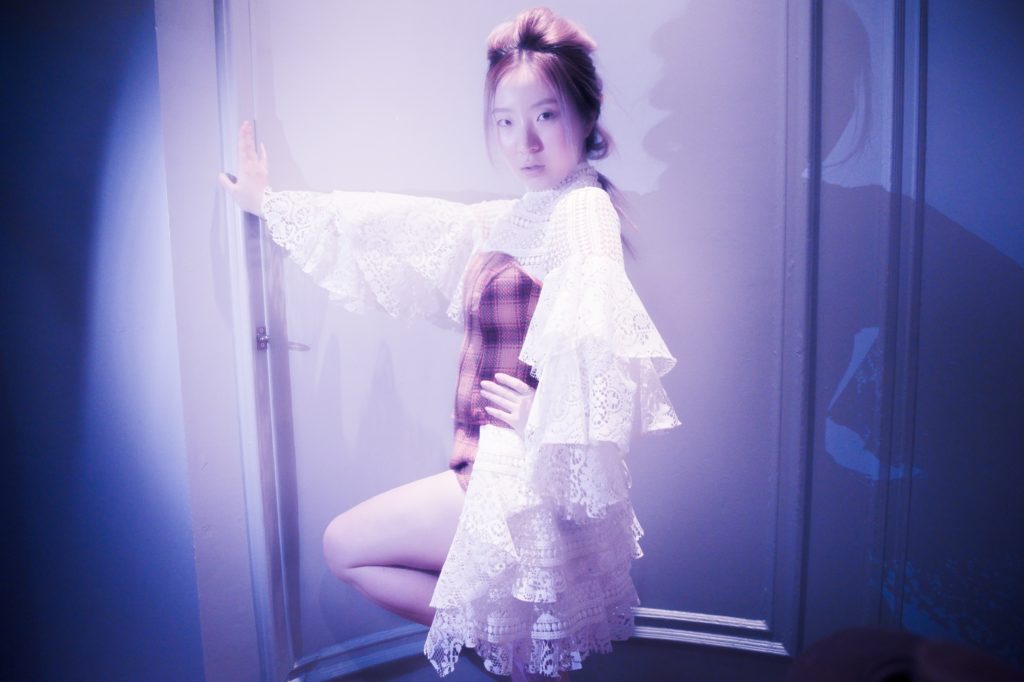
A project creating a new visual narrative for slow fashion. The project will create a series of fashion portraits featuring people wearing outfits styled from their existing wardrobes.
Working closely with professional hair and make-up artists the project aims to breathe fun and style into perceptions of slow fashion. While each of the portrait concepts will be unique to the person and their wardrobe the intended overall style is deliberately ‘high fashion.’ The aim is to bring some of the glamour only given to new items to the slow fashion movement.
I have specifically titled this project as ‘slow fashion’ to emphasize its focus on tackling our overconsumption of textiles. More information on this can be found in the FAQ section below.
Getting Involved-Front of Camera
I’m actively looking for people to model.
Style your most creative/favourite outfit from well loved items of clothing in your wardrobe. What do I mean by well-loved? Every item must be at least 1 year old, ideally older. I’d like each outfit to be centred around an item of clothing you have an emotional attachment to, a story behind it etc but that’s not a deal breaker.
To get in touch send me a quick selfie of the outfit you’ve put together and any other info you think might be helpful like why you’re interested in participating. If selected we’ll design a portrait session for you and your outfit complete with make-up and hair.
Getting Involved- Production Team
Hair Stylists & Make-up Artists please get in touch
All work will be time for print. Edinburgh based stylists & artists preferred as sessions will be in/around Edinburgh but if necessary I will reimburse for travel from other central belt locations.
FAQs
Who can apply?
This project is open to everyone. You do not need to be a professional model to participate. You do need to be comfortable in front of a camera, able to take direction and have patience, photo shoots can be long!
Where will my session take place?
The location for your portrait will depend on you and your outfit/style, it might be outdoors or it could be studio based. If selected I’ll be in touch to arrange a meet-up to chat and toss around some ideas before moving ahead.
What do I get out of this?
A fun experience! The project is being run on a time for print basis meaning all participants will receive high resolution files of images from their portrait session, have any travel costs reimbursed and a free lunch/snacks on set. For make-up and hairstylists I will also always try to ensure we capture close-ups of your work in addition to the full scale images.
Why the Fashion Industry?
Fashion/textiles are widely recognised as one of the most polluting industries on the earth.i The drive for ever cheaper and faster to market clothing is also the cause of human rights abuses around the globe, most recently exemplified in the Rana Plaza factory collapse in Bangladesh resulting in the deaths of 1,138 people.ii Finally the fast fashion business model not only results in more textile waste, as we increasingly treat clothing as disposable items,iii but also results in our mental exhaustion from this never ending accumulation of stuff.iv
What do you mean by slow fashion?
Creating the radical structural change needed within the fashion industry requires a holistic approach. The first and more urgent task is to slow the flow of materials entering into the textile chain.v This is about slowing down fast fashion. Here fashion brands need to design clothing for longer life and people need to extend the use of their clothing. Promoting extended use for clothing in a era of cheap disposable fashion means challenging the allure of instant gratification.
Currently much of the industry focus is on how to recycle garments at the end of their lives and on reducing the broader ecological footprint of garments: the use of water, chemicals, energy, and land. These are all important elements but the emphasis on recycling risks creating a sense of guilt free consumption which will only increase overconsumption.
Why Fashion Portraits?
Consumerism/overconsumption cannot be tackled simply by admonishing people not to buy things. We must understand that “the pleasure of cheap fashion is neurologically very real” and efforts to retrain how we think and feel about buying clothes needs to be able to provide an element of pleasure as well. Taking part in a fashion shoot aims to be both fun and memorable experience in and of itself but also one which increases people’s emotional attachment to clothing they already own.
Notes
i. There is a widely stated statistic that the textile industry is the second most polluting industry on earth, second only to oil. I have been unable to find a source or calculations for this statistic however which is why I have written it as ‘one’ of the most polluting industries as there is no doubt that the textile industry causes extreme environmental harm.
ii. http://fashionrevolution.org/about/why-do-we-need-a-fashion-revolution/
iii. Timeout for Fast Fashion, Greenpeace, pg 2. https://www.greenpeace.org/international/Global/international/briefings/toxics/2016/Fact-Sheet-Timeout-for-fast-fashion.pdf
iv. Fashion at the Crossroads, Greenpeace, pg. 14. http://www.greenpeace.org/international/Global/international/publications/detox/2017/Fashion-at-the-Crossroads.pdf?utm_campaign=Press%20Release&utm_source=Link&utm_medium=HK
v. Fashion at the Crossroads, Greenpeace, pg. 6. http://www.greenpeace.org/international/Global/international/publications/detox/2017/Fashion-at-the-Crossroads.pdf?utm_campaign=Press%20Release&utm_source=Link&utm_medium=HK